
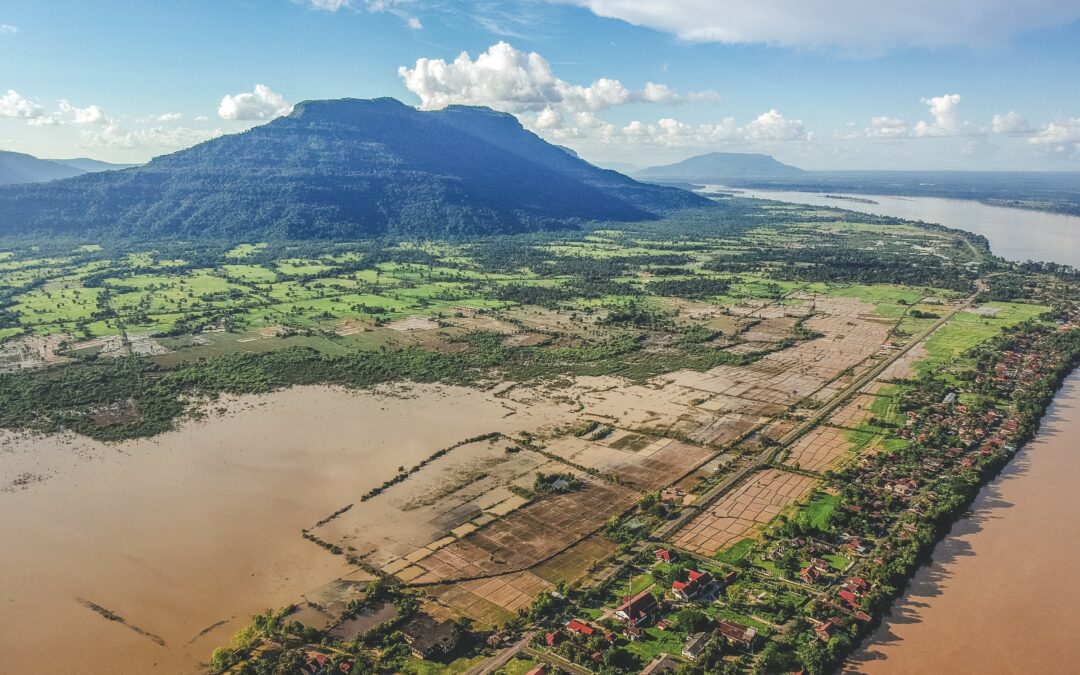
Three days is enough to experience the essence of Southern Laos: the small regional capital of Pakse, the village of Champasak with its UNESCO-listed Khmer temple, and the 4,000 Islands, where the Mekong spreads to its full width before slipping into Cambodia. Here is a tried-and-tested day-by-day itinerary, with realistic travel times and the right place to base yourself.
The principle is simple: rather than changing hotels every night, settle in Champasak, at the geographical centre of the loop, and explore from there. You sleep in peace by the river, and every stage becomes a day trip.
Day 1 — Pakse to Champasak, arriving on the Mekong
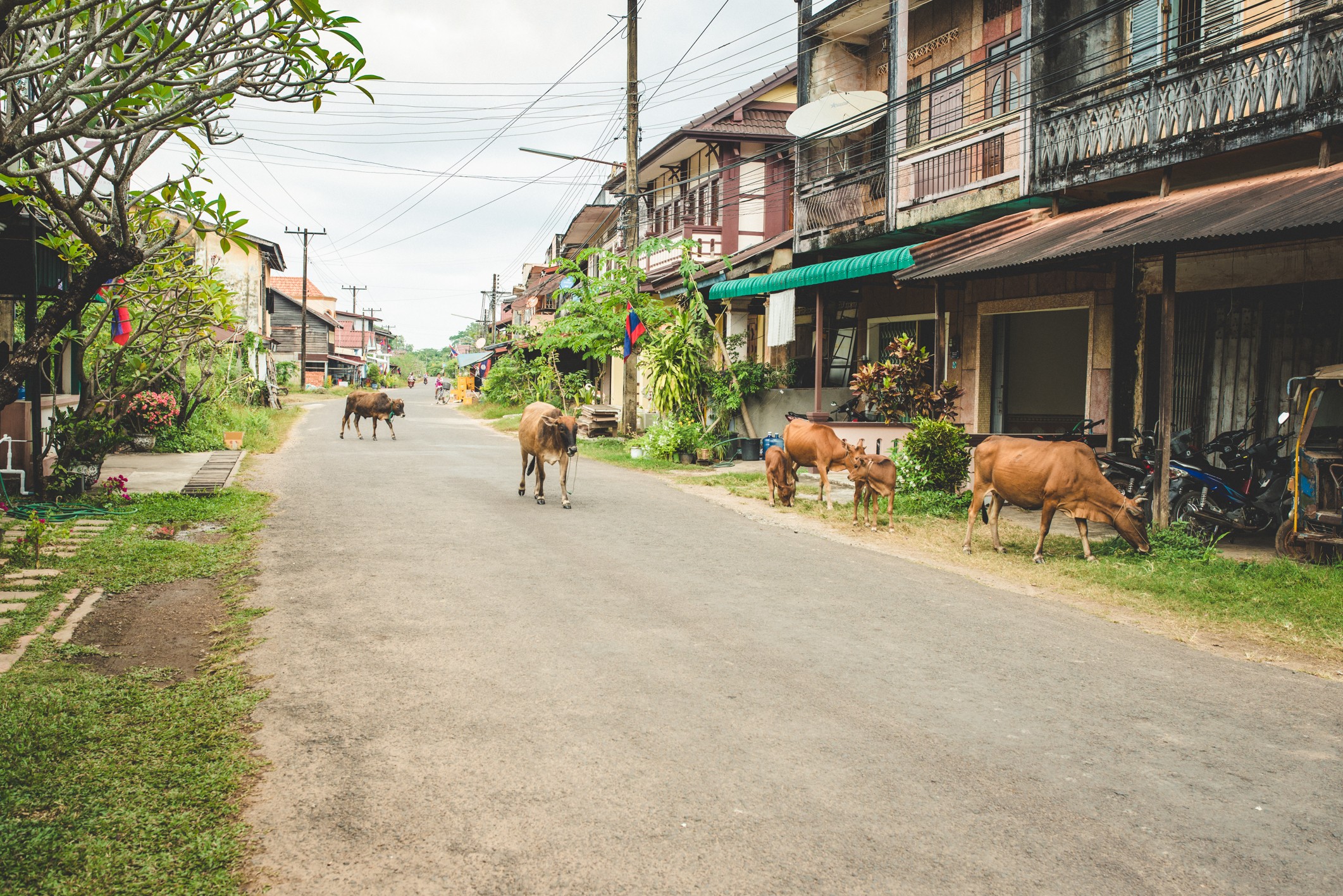
Pakse is the gateway to the south: domestic flights, night buses from Vientiane and connections from neighbouring Thailand all arrive here. Don’t linger too long — half a day covers the market, a few Franco-Chinese shopfronts and a coffee overlooking the Mekong.
Champasak is only around 30 kilometres away, less than an hour’s drive along the river. All the practical details are in our guide on how to get to Champasak.
Spend the afternoon taking the measure of the village: one peaceful main street, old colonial and trading houses, living temples, children on bicycles. Champasak was once the seat of a kingdom, and it has kept a quiet dignity. At the end of the day, find a spot facing the river for sunset — it is a daily spectacle and not to be missed. The Sala of the Soum Noum restaurant, right on the water with its 180° panorama, was made for it (the restaurant).
Day 2 — Wat Phou in the morning, the countryside by bicycle in the afternoon
The temple before the heat
Start early. Wat Phou, a Khmer sanctuary older than Angkor and a UNESCO World Heritage site, spreads across the slopes of Phou Khao mountain, a few kilometres south of the village. The site rewards the effort: a processional causeway, two palaces, then a frangipani-shaded stairway climbing to the upper sanctuary and its immense view over the plain and the Mekong. Allow half a day, and read our full guide to visiting Wat Phou to prepare.
An afternoon on the water or through the rice fields
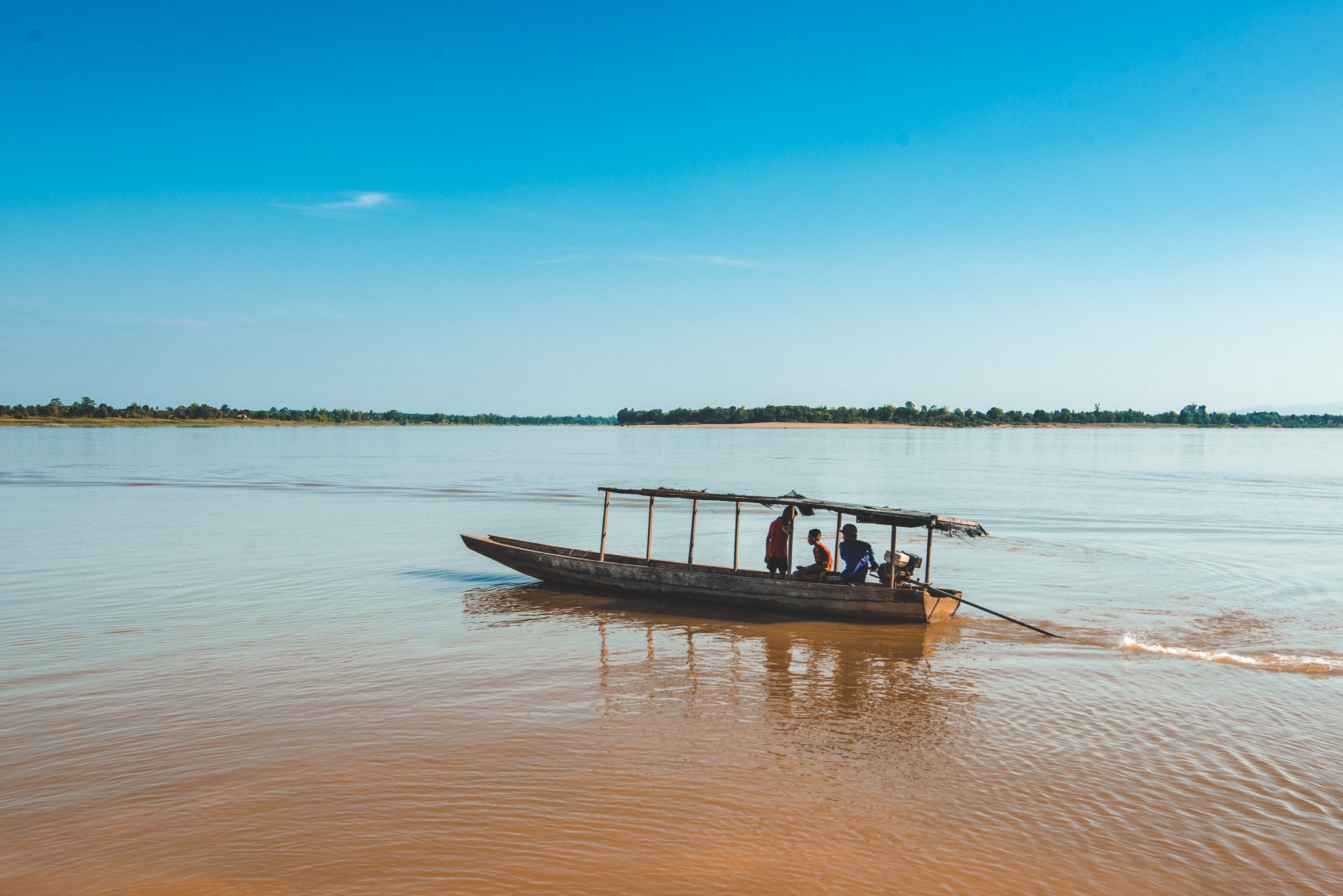
Back in the village, two fine options. By bicycle: the west-bank countryside is flat, green and almost free of cars — ride as far as Wat Muang Kang, the oldest active temple in Champasak, a curious blend of Burmese, Cambodian, French, Lao and Vietnamese influences. By wooden boat: drift along the Mekong towards a sandbank or a fishing village. Our local experiences page details these outings, and best things to do in Champasak gives the full list.
Day 3 — The 4,000 Islands, the Mekong at its most extravagant
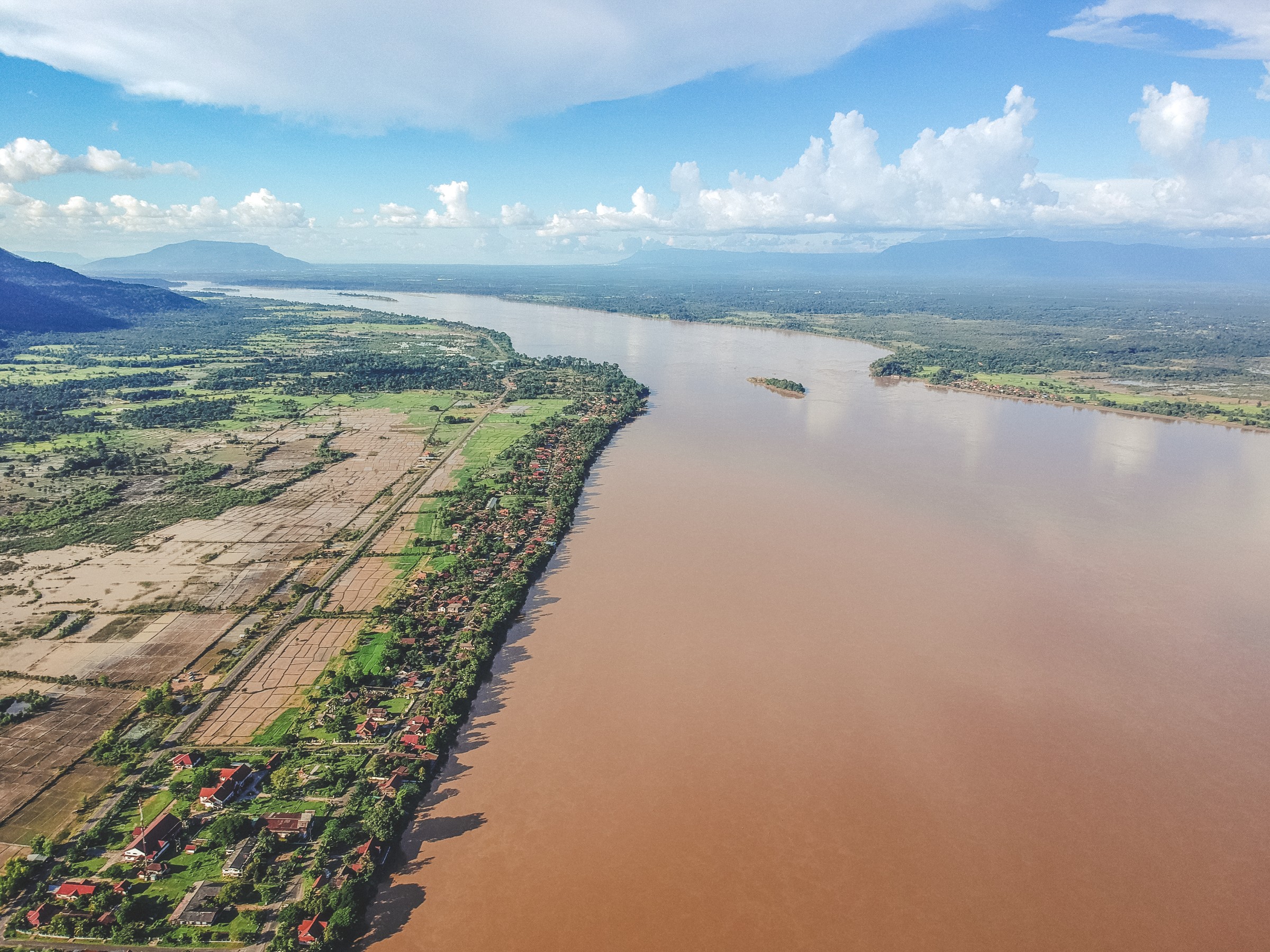
Head south. Allow two to three hours by road to Nakasang, the pier for the islands, then around twenty minutes by boat to Don Det or Don Khone. This is where the Mekong — some 4,900 kilometres from its source on the Tibetan plateau — splits into a maze of islands and channels the Lao call Si Phan Don, “the four thousand islands”.
On Don Khone, hire a bicycle: the old French railway line, the bridge linking the two islands and the Li Phi falls make an easy loop. On the way back to the main road, stop at Khone Phapheng, the most powerful waterfall in South East Asia — the wider Khone falls system forms the broadest cataract in the world. It was this natural barrier that prevented continuous navigation into Cambodia and gave the region its colonial railway.
Return to Champasak at the end of the day for a last dinner by the river.
If you have an extra day
Add the Bolaven Plateau: waterfalls, cool air and highland coffee and tea plantations make it the natural complement to the loop. Our Southern Laos page gives an overview of the region, and the Mekong River tells the story that runs through this whole journey.
Where to stay for these 3 days
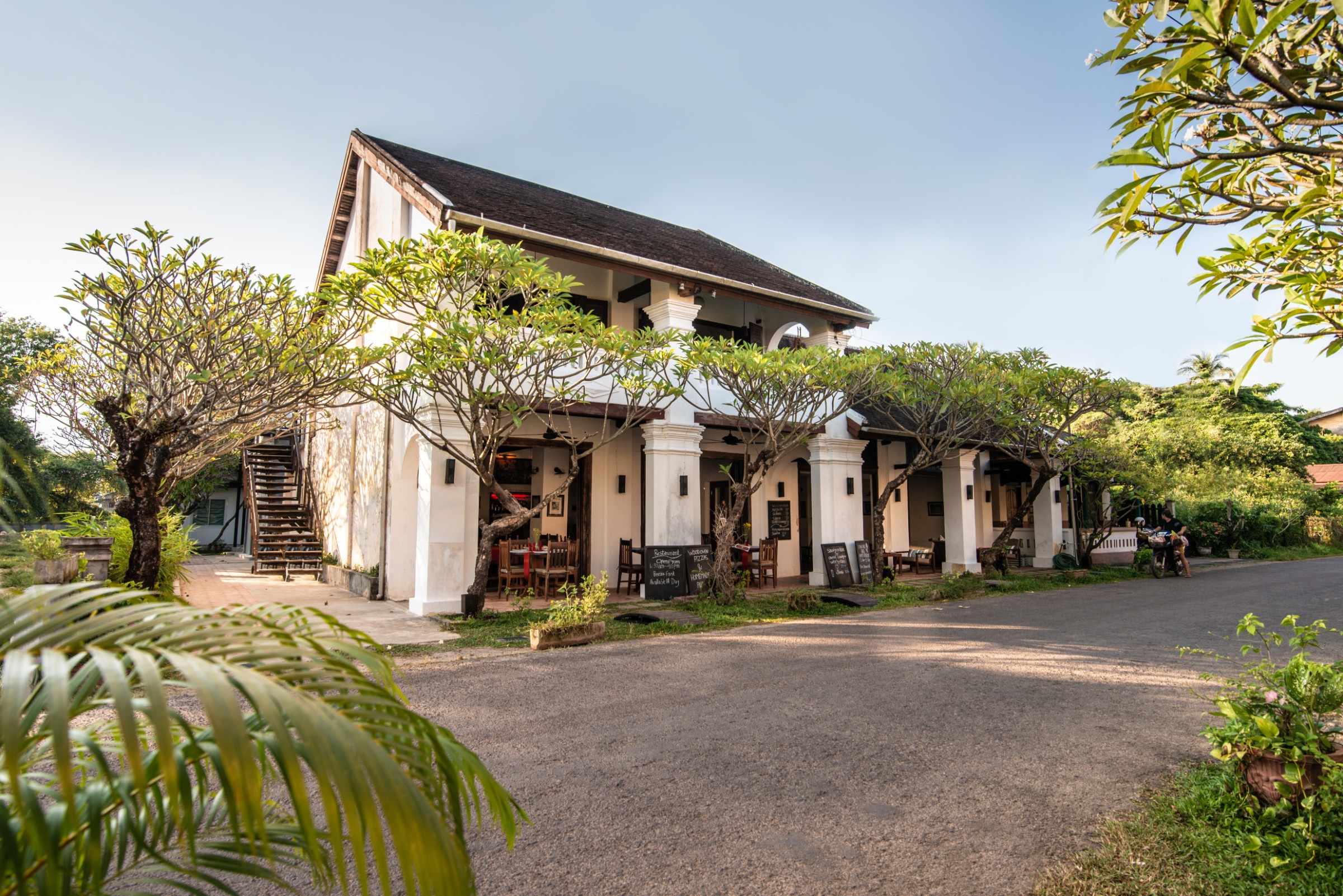
Champasak is the ideal base: halfway between Pakse and the islands, peaceful, and at the foot of Wat Phou. Residence Bassac, an early twentieth-century trading house restored as a 14-room boutique hotel on the banks of the Mekong, is the address with character (the rooms). To compare options region by region, see our guide on where to stay in Southern Laos.
Practical notes
- Route: Pakse → Champasak (~30 km, under 1 hour) → Wat Phou (just south of the village) → 4,000 Islands (2–3 hours by road + ~20 minutes by boat) → back to Champasak.
- Best season: November to April, the dry season, with clear skies. In February, the Boun Wat Phou festival brings the temple to life. May to October is the green season: vivid landscapes and the Mekong at its highest.
- Direction: the loop also works in reverse, arriving from Cambodia in the south.
- What to bring: a hat, water and good shoes for Wat Phou; visit early, before the heat.
- Transfers: the hotel arranges journeys from Pakse and to the islands (transfers).
Recent Comments