
World Heritage Site by UNESCO
Wat Phou
Wat Phou, also written Vat Phou, is a Khmer temple complex near Champasak in southern Laos. Explore its sacred landscape from Residence Bassac, a boutique hotel in the town.
Read our practical guide to visiting Wat Phou and discover our rooms and suites in Champasak.
Contact
+856 20 96 416 473
resa@residencebassac.com
Location
Ban Vat Armat, Champasak,
Champasak Province, Lao PDR
southern laos
Wat Phou: a Khmer sanctuary
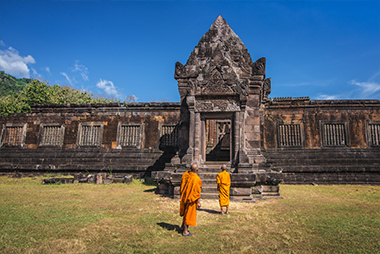
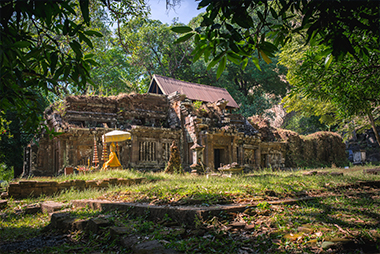
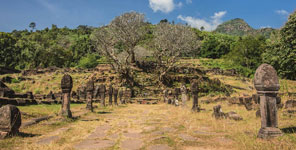
Wat Phou stands at the foot of the sacred mountain of Phou Khao, near Champasak in southern Laos. A sanctuary existed here as early as the fifth century; the surviving buildings mainly date from the eleventh to thirteenth centuries.
Originally a Hindu sanctuary dedicated to Shiva, the site later became a place of Buddhist worship. It remains a religious site today.
In 2001, Wat Phou and the associated ancient settlements within the Champasak cultural landscape became a UNESCO World Heritage Site.
The visit leads through the temple complex and up stone steps lined with frangipani trees to the upper sanctuary. Take your time on the climb and enjoy the views across the plain.
Planning your visit
Allow two to three hours to explore the temple and museum. Early morning is a comfortable time to visit before the strongest heat. Bring water, sun protection and shoes with a good grip, and dress modestly for this place of worship.
The climb to the upper sanctuary includes steep stone steps. Take breaks and enjoy the views from the terraces at your own pace.
For current opening times, entrance prices and transport from Champasak, contact our travel desk. Afterwards, return to town for a meal at Soum Noum restaurant.
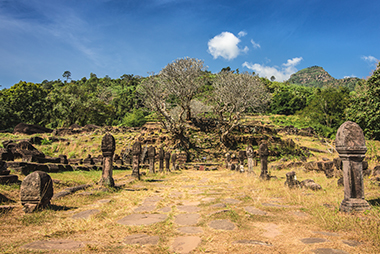
Some 2.5 kilometres south of Wat Phou lie the ruins of Hong Nang Sida. A local legend tells of a princess who sacrificed her life to save her father, and of a king who dedicated a temple to her. This story is part of the site’s cultural traditions, rather than a documented account of its construction.
During the decline of the Khmer empire in the 14th century, its people migrated to the river and around various sacred natural sites such as mountains, springs or rivers that are of a religious and mystical symbolism still today.
The oldest historical remains of Champasak are traces of more than a thousand years of human occupation that are gradually being brought to light from the notes of the first explorers to the present time.
The architecture of the various monuments of the Ancient City is organized in an axial figure, from Hong Nang Sida, through Vat Phou and Nong Din Chi, a site recently discovered on the mountain Phou Malong, which is located on the Pakse road to Champasak.
This architectural, cultural, and historical mosaic makes Champasak an absolutely fascinating place, all set in a landscape mixing shimmering colors, the serenity of the Mekong, and the mountainous panoramas.
some possible tours
Around Champasak
west bank
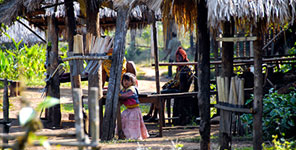
When you visit Champasak, your pleasure starts along the roads that lead to the town. Sitting 30 kilometres from the provincial capital of Pakse…
East bank
If you choose to return to Pakse along the east bank of the Mekong, you can take the ferry with your vehicle at Ban Lak Sisip (around 40 kilometres from Champasak).
mekong river
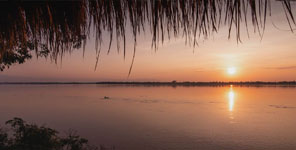
It is also possible to go to Champasak by boat from Pakse, either as a group, or by private boat or by a multi-day cruise. Whatever your preference…
southern laos
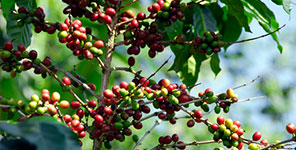
Champasak is the ideal starting point to explore the region. From here you can easily reach the 4,000 Islands and Bolaven Plateau, as well as Pakse.